

Liquid electrochemistry

The In Situ Liquid Electrochemistry TEM System utilizes MEMS-based chips to apply electrical stimuli to liquid thin-layer environments or nanoscale battery systems. Combined with multiple TEM characterization techniques, including EDS, EELS, SAED, HRTEM, and STEM, it enables real-time and dynamic observation of electrodes, electrolytes, and their interfaces under operating conditions at the nanoscale and even atomic scale. The system provides critical insights into microstructural evolution, reaction kinetics, phase transformations, elemental valence states, chemical changes, microscale stress development, as well as atomic-scale structural and compositional evolution at surfaces and interfaces during electrochemical processes.
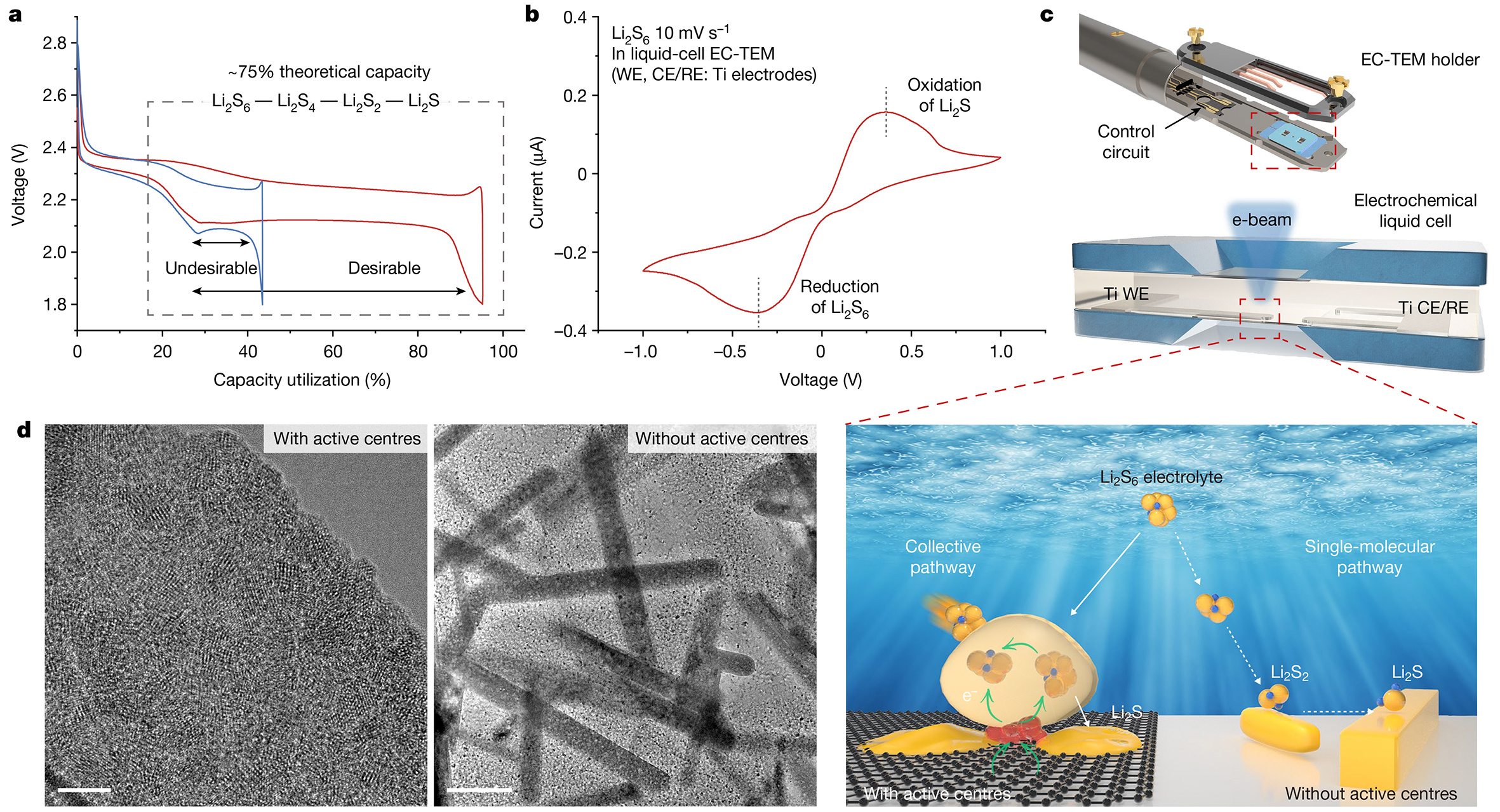
Design of liquid-cell EC-TEM to investigate the interfacial reactions of LiPSs.
Visualizing interfacial collective reaction behaviour of Li–S batteries
Nature 621, 75–81 (2023)
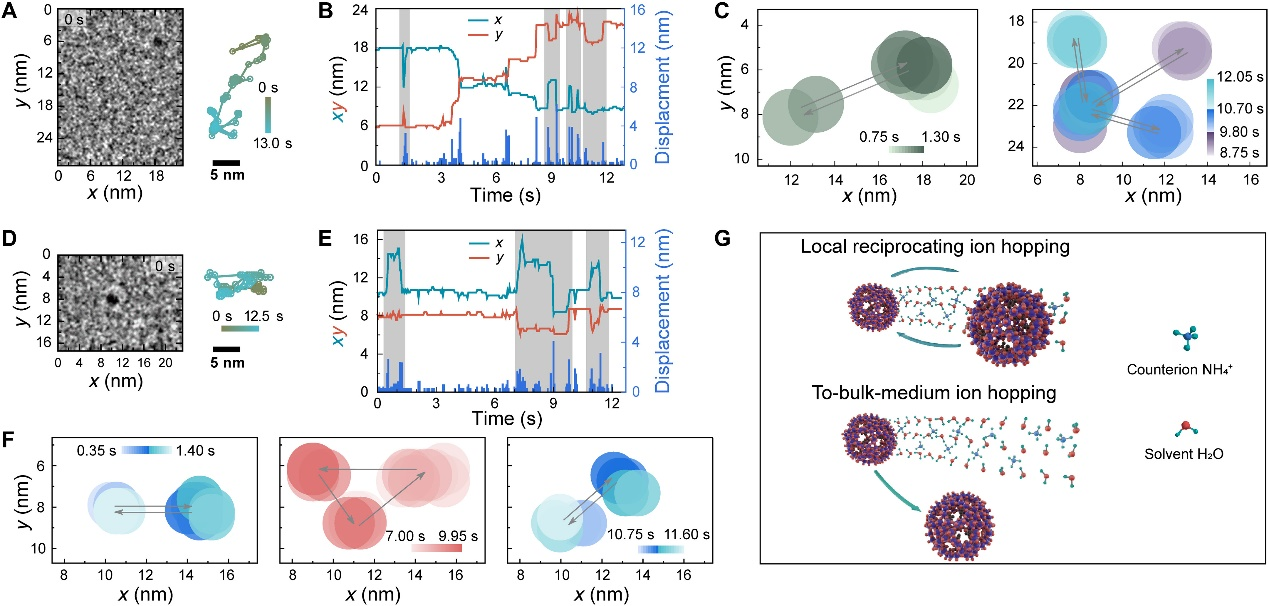
Diffusion dynamics of single ions showing local reciprocating ion hopping motion.
Observing ion diffusion and reciprocating hopping motion in water
SCIENCE ADVANCES.28 Jul 2023.Vol 9, Issue 30
In-situ Multimodal Imaging and Spectroscopy of Mg Electrodeposition at Electrode-Electrolyte Interfaces
Using a multimodal approach combining in situ liquid-cell transmission electron microscopy (TEM), scanning transmission X-ray microscopy (STXM), and X-ray absorption spectroscopy (XAS), researchers investigated the electrochemical deposition of Mg on Ti and Au electrodes. A magnesium aluminum chloride complex was synthesized and used as the electrolyte.
During in situ charge–discharge cycling, irreversible electrochemical behavior was observed. During charging, a uniform Mg film was deposited on the electrode surface, consistent with the intrinsically non-dendritic nature of Mg deposition in magnesium-ion batteries. However, the deposited Mg film did not fully dissolve during the subsequent discharge process.
Further analysis by in situ STXM and XAS revealed that the deposited layer consisted of a six-coordinated Mg compound rather than metallic Mg. These findings provide important insights into the origins of irreversibility and failure mechanisms in magnesium-ion batteries.
More importantly, this study demonstrates a powerful and universal methodology for investigating electrochemical processes in operando conditions without additional sample preparation, thereby preserving the native state of battery materials and electrodeposited products. The combination of multimodal in situ imaging and spectroscopy offers new opportunities to address complex electrochemical phenomena across multiple length and time scales, with broad applicability to a wide range of energy storage systems.
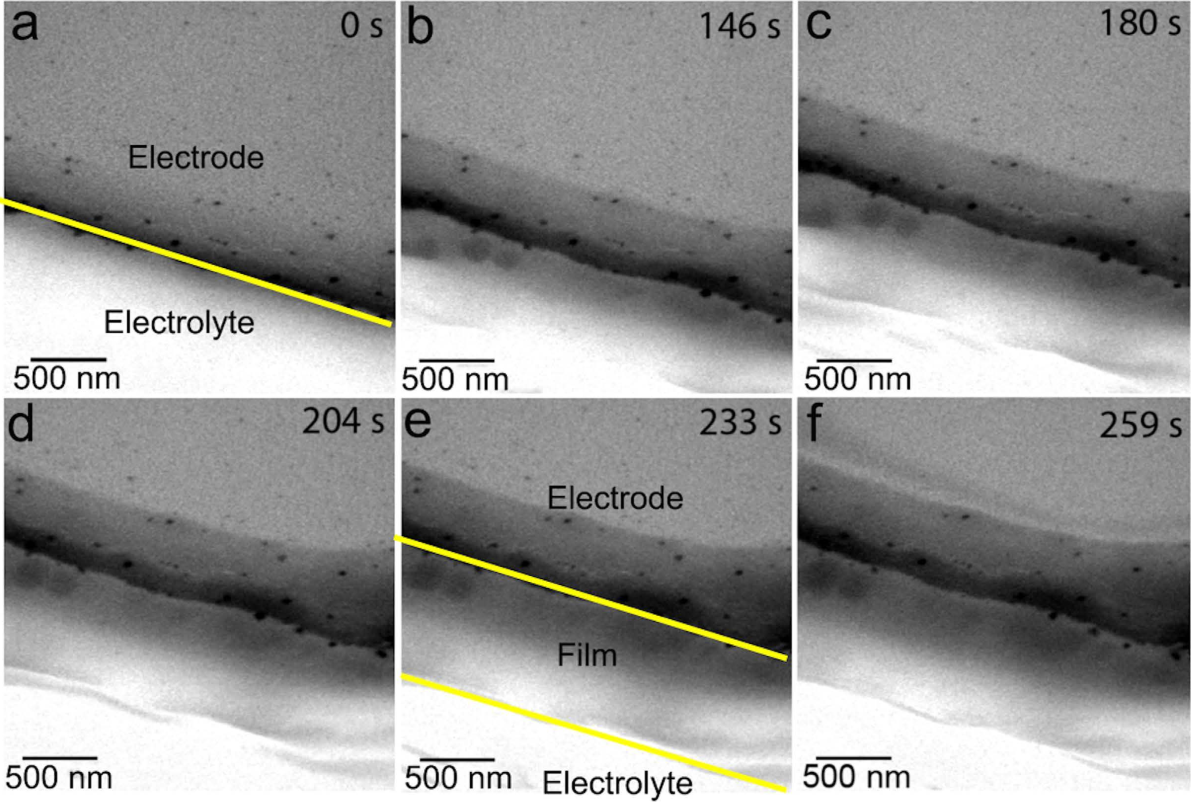
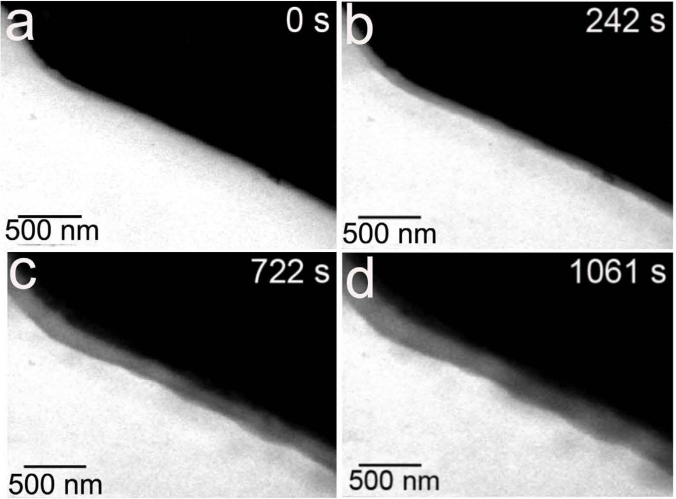
Wu, Y. A. et al. In-situ Multimodal Imaging and Spectroscopy of Mg Electrodeposition at Electrode-Electrolyte Interfaces. Scientific Reports 7, 42527, doi:10.1038/srep42527
Structural and Morphological Evolution of Lead Dendrites During Electrochemical Migration
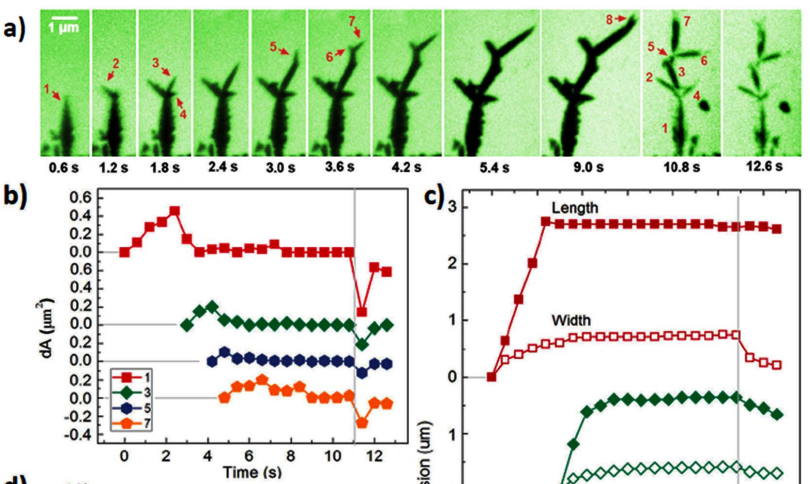
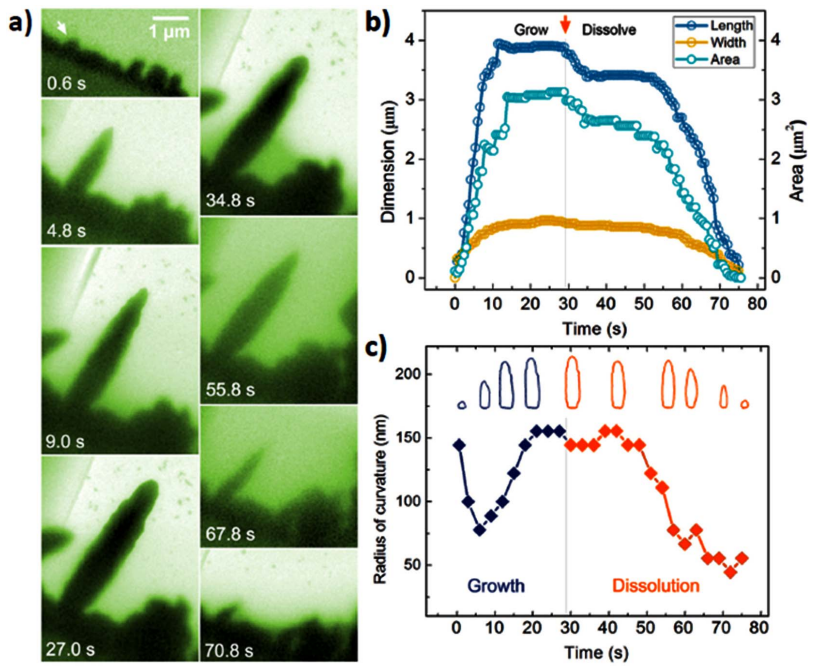
The electrochemical deposition and dissolution of lead on gold electrodes immersed in an aqueous lead nitrate electrolyte were investigated in situ using a biasing liquid-cell transmission electron microscope (TEM). Real-time observations enabled direct visualization of the growth dynamics of lead dendrites under an applied electric potential.
TEM imaging revealed that lead dendrites formed through rapid protrusion and repeated tip-splitting processes within the electrolyte. The fast-growing dendrite tips initially consisted of polycrystalline nanograins, which gradually evolved into single-crystalline branches during growth. The study demonstrated a unique electrochemical growth pathway in which randomly oriented nanocrystals nucleate, aggregate, align, and attach to form single-crystal dendrites.
Furthermore, the results showed that the concentration of lead ions in the electrolyte has a significant influence on dendrite morphology and growth behavior. These findings provide valuable insights into dendrite formation mechanisms during electrochemical migration and have important implications for the reliability and safety of electrochemical devices.
Sun, M., Liao, H.-G., Niu, K. & Zheng, H. Structural and Morphological Evolution of Lead Dendrites during Electrochemical Migration. Scientific Reports 3, 3227, doi:10.1038/srep03227
In Situ TEM Investigation of PbSe Nanocrystal Degradation in Air
PbSe nanocrystals have attracted significant interest due to their promising applications in optoelectronics and energy-related technologies. However, their practical use is limited by poor air stability, which can lead to undesirable changes in optical and electronic properties.
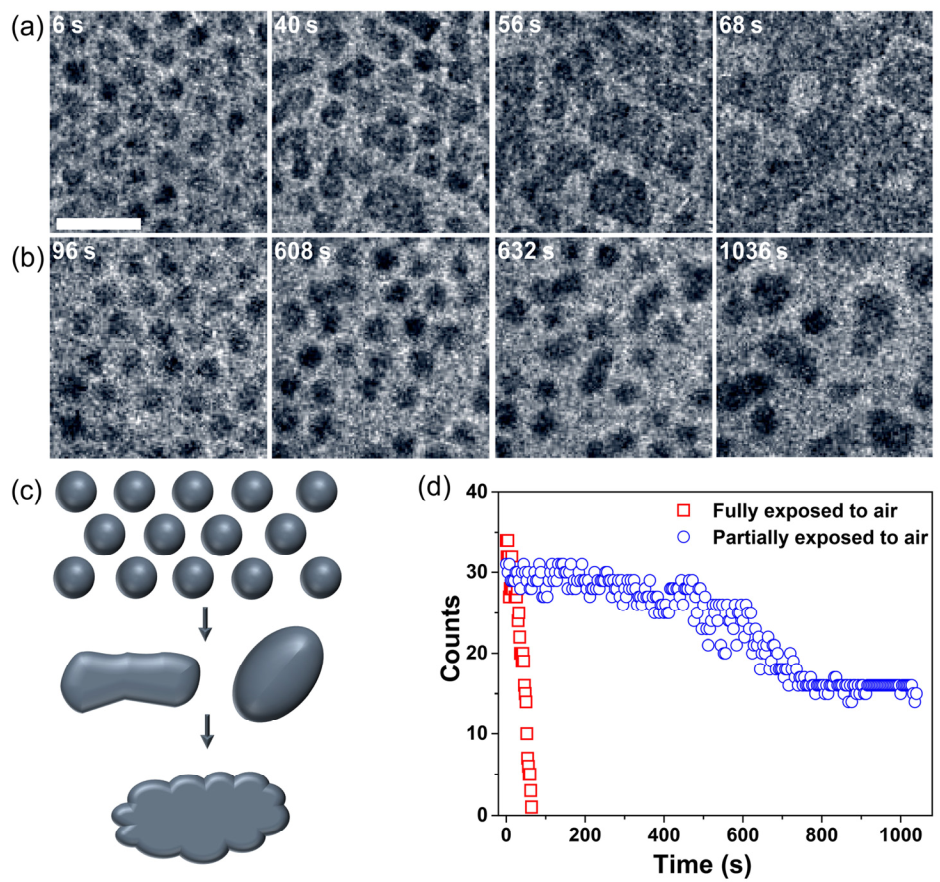
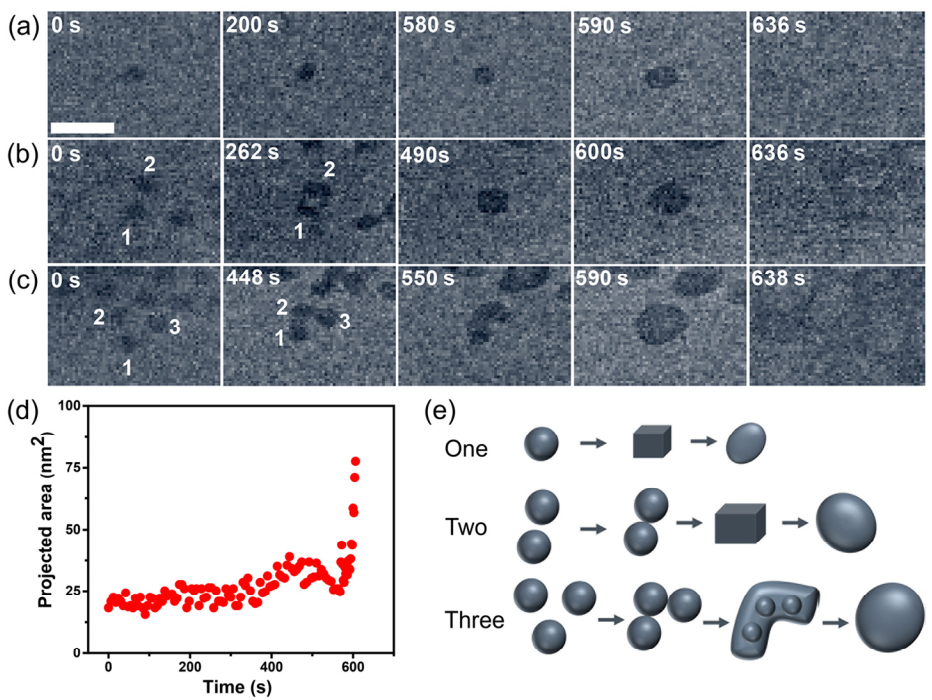
In this study, an air-connected environmental cell combined with in situ transmission electron microscopy (TEM) was employed to directly observe the degradation behavior of PbSe nanocrystals under air exposure. Complementary investigations, including in situ environmental TEM under pure oxygen, liquid-cell TEM in water, and ex situ experiments, were also performed to elucidate the degradation mechanism.
Real-time observations revealed that, under electron-beam irradiation and exposure to air (or oxygen), PbSe nanocrystals underwent a series of structural transformations, including shape evolution into cuboid intermediates, particle coalescence, and extensive solid-state fusion leading to the formation of continuous PbSe films. Further analysis showed that these films subsequently transformed into amorphous Pb-rich phases and eventually pure Pb, indicating that Se reacted with oxygen and was removed through volatilization under electron-beam irradiation.
These findings demonstrate that the degradation of PbSe nanocrystals in air is primarily driven by ligand dissociation and removal from the nanocrystal surface, providing valuable insights into the stability and failure mechanisms of PbSe nanomaterials.
Xinxing Peng, Hong‐Gang Liao. In situ TEM Study of the Degradation of PbSe Nanocrystals in Air. Chem. Mater.,
10.1021/acs.chemmater.8b04052