Spring Series In-Situ Holders(Heating&Electrochemistry)
Product Features
- Product composition
- Unique Advantages
- Functional Parameters
- Application
-
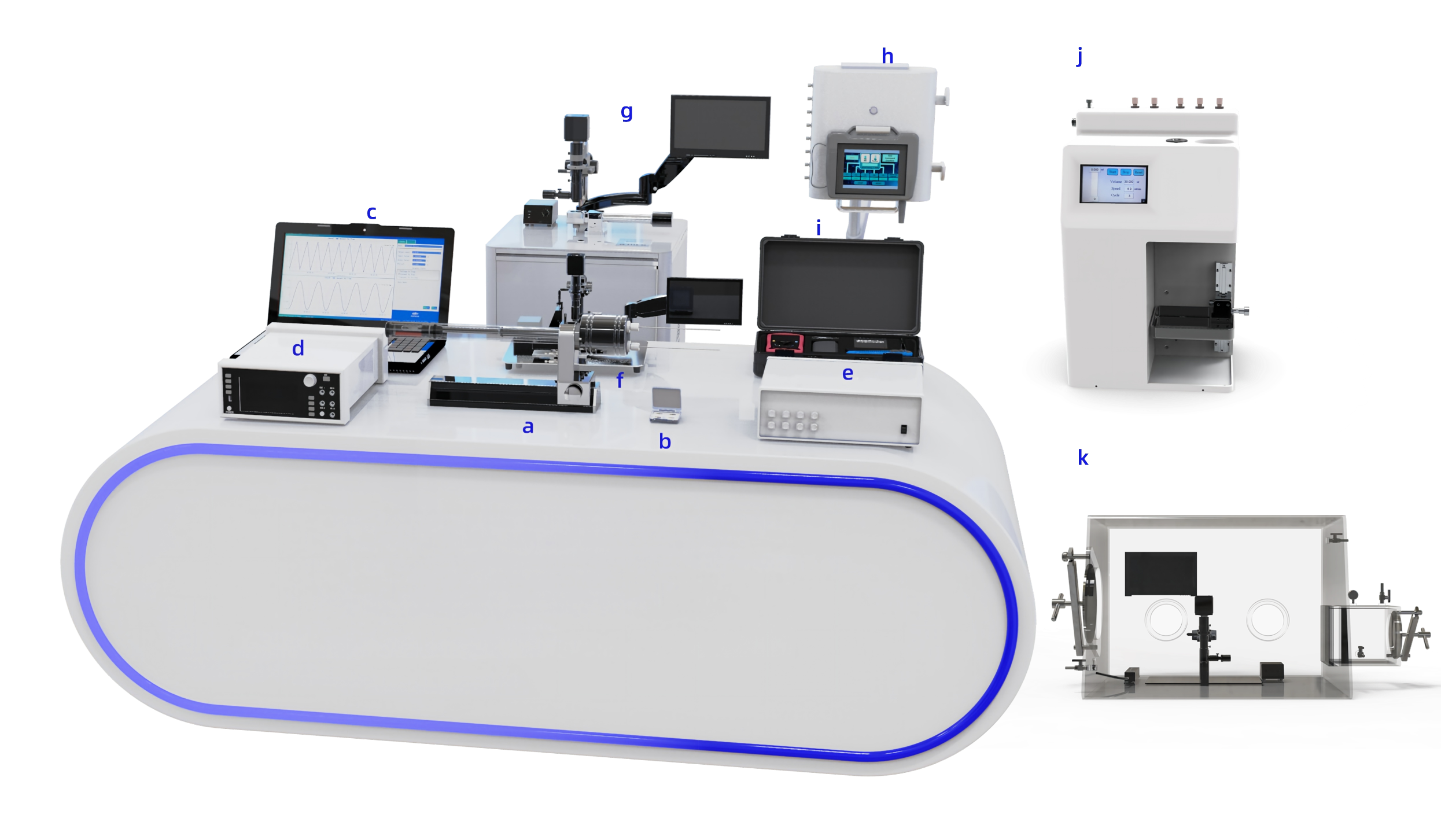
a.Spring Series In-Situ Holders(Heating&Electrochemistry) b.MEMS Heating & Electrochemistry Liquid Cell Chip (Fluid) c.Heating & Voltage Control Software d.Thermal Controller e.Electrochemical Work Station f.High-precision Chip Assembly Instrument g.High Vacuum Leak Checking Station h.In-situ Nanofluidic Control System (Liquid) i.Accessory Package j.Cleaning Instrument for Sample Holders k.Environment Gloves Box -
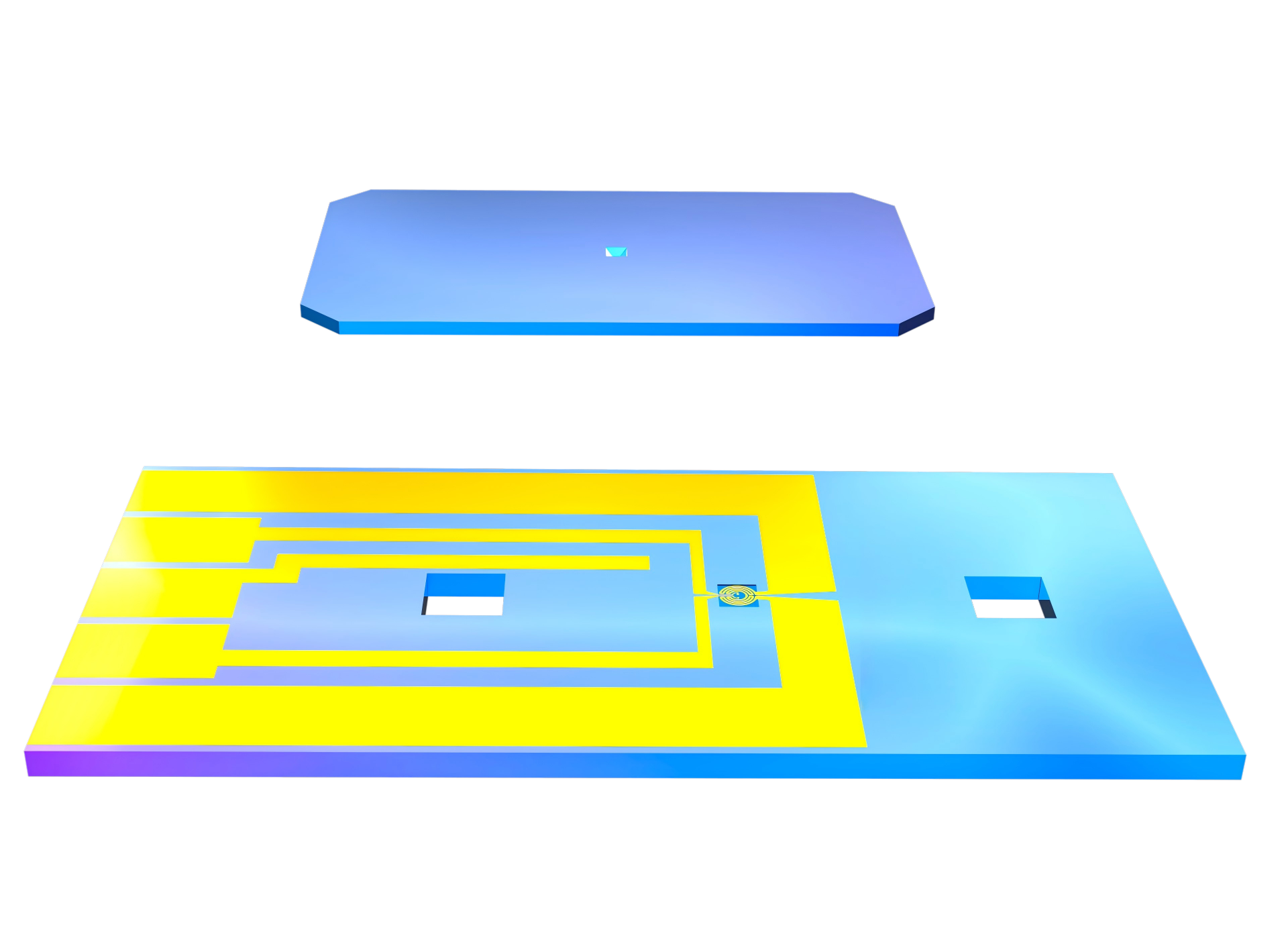
Highest resolution in the industry ·1.Unique MEMS processing technology, with a silicon nitride film thickness of up to 10nm in the chip window area. ·2.The chip packaging adopts a double insurance method of bonding inner seal and epoxy resin outer seal, making the thinnest interlayer between the chips only about 100-200 nm. The ultra-thin interlayer greatly reduces interference with the electron beam, allowing for clear observation of the atomic arrangement of the sample, and achieving atomic level resolution in the liquid phase environment. 3.Specially designed chip window shape can avoid the thickening of liquid layer caused by the bulging of silicon nitride film, which may affect the resolution. High security ·1.The common liquid sample holders of other brands on the market, due to the limitations of their own liquid pool chip design scheme, can only drive a large flow of liquid through the sample stage and the peripheral area of the chip through the huge pressure generated by the liquid pump,which poses a safety hazard of a large amount of liquid leakage. The liquid mainly enters the nano pores in the middle of the chip through diffusion effect,and there is no real flow rate control in the chip observation window. ·2.Adopting patented nanofluidic technology, fluid differential control is achieved through a piezoelectric micro control system to achieve nano upgraded micro fluid transportation. The redundant liquid volume in the in-situ nanofluidic system and sample holder is only slightly increased, effectively ensuring the safety of the electron microscope. ·3.Adopt the polymer membrane surface contact sealing technology,compared with the O-ring sealing,the sealing contact area is increased,effectively reduce the risk of leakage. ·4.Using ultra-high temperature coating technology, the silicon nitride film in the window area of the chip has advantages such as high temperature resistance,low stress,pressure resistance, corrosion resistance,and radiation resistance. Unique multi-field coupling technology ·It can realize multi-field coupling of light,electricity,heat and
fluid in liquid phase environment.Excellent thermal properties ·1.High precision infrared temperature calibration, micron level high
resolution thermal field measurement and calibration,to ensure
the accuracy of temperature.·2.The high stability have precious metal heating wire(non-ceramic material), it is not only a thermal guide material but also a thermal sensitive material. Its resistance has a good linear relationship with temperature.The heating area covers the whole observa tion area,and the heating and cooling speed is fast,and the thermal field is stable and uniform. Temperature fluctuation in steady state less than±0.01℃. ·3.Adopt the closed loop high-frequency dynamic control and feedback of ambient temperature control method,high-frequency feedback control to eliminate errors,achieving temperature control accuracy of ±0.01℃. ·4.Unique multi-stage composite heating MEMS chip design, controls the heat diffusi on during heating process, greatly inhibits the heat drift during heating process, and ensures the efficient observation of the experiment. Intelligent software and automation equipment ·1.Man-machine separation, software remote adjustment laser band
and intensity,program automatic control of tilt Angle.·2.The whole process is equipped with precision automation equipment to assist manual operation and improve experimental efficiency. Advantages of R&D team ·1.Team leaders participated in the development and complet ion
of in situ liquid phase TEM at the early stage of development.·2.Our team independently designed in-situ chips,mastered the core technology of chips,and owned multiple chip patents. ·3.Our team has more than 20 people engaged in in-situ liquid phase TEM research, which can provide technical support for in-situ experiments in multiple research directions. -
Category Index Functional Parameters Basic parameters Rod Material High strength titanium alloy Window thickness 20nm(Support ugrande to 10nm) Applicable TEM brand Thermo Fisher/FEI, JEOL, Hitachi Applicable Pole Piece ST, XT, T, BioT, HRP, HTP, CRP Tilt Angle α=±20° (Actual range depends on electron microscope and pole piece model) (HR)TEM/STEM Supported (HR)EDS/EELS/SAED Supported -

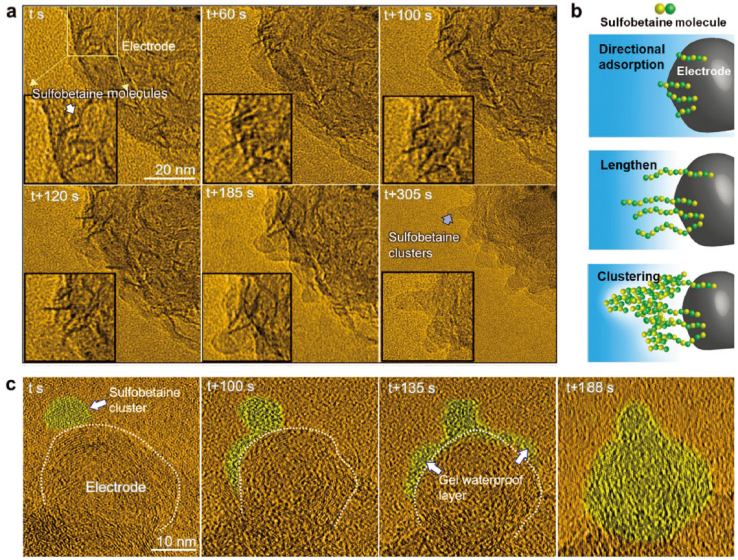
In situ atomic resolution HRTEM observation on the behaviors of sulfobetaine molecules at the solid-liquid interface under external electric field and the formation of the waterproof layer around the negative electrode surface.
Controlling Interfacial Structural Evolution in Aqueous Electrolyte via Anti-Electrolytic Zwitterionic Waterproofing.
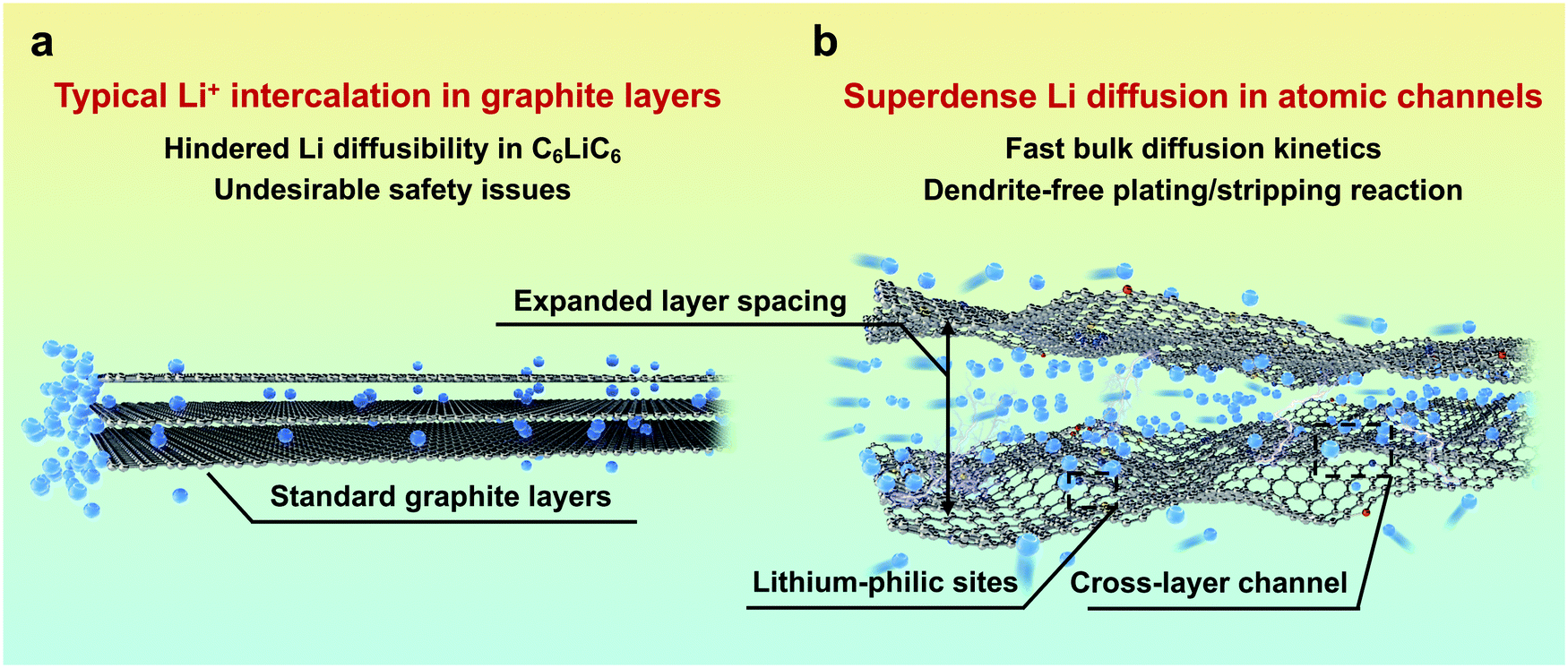
Adv. Funct. Mater. 2022, 2207140.Comparative illustration of graphite layers and atomic channels. Schematic illustration of (a) typical Li+ intercalation in graphite layers and (b) superdense Li diffusion in atomic channels.
Efficient diffusion of superdense lithium via atomic channels for dendrite-free lithium–metal batteries Energy & Environmental Science 2022, 15 (1), 196-205.